

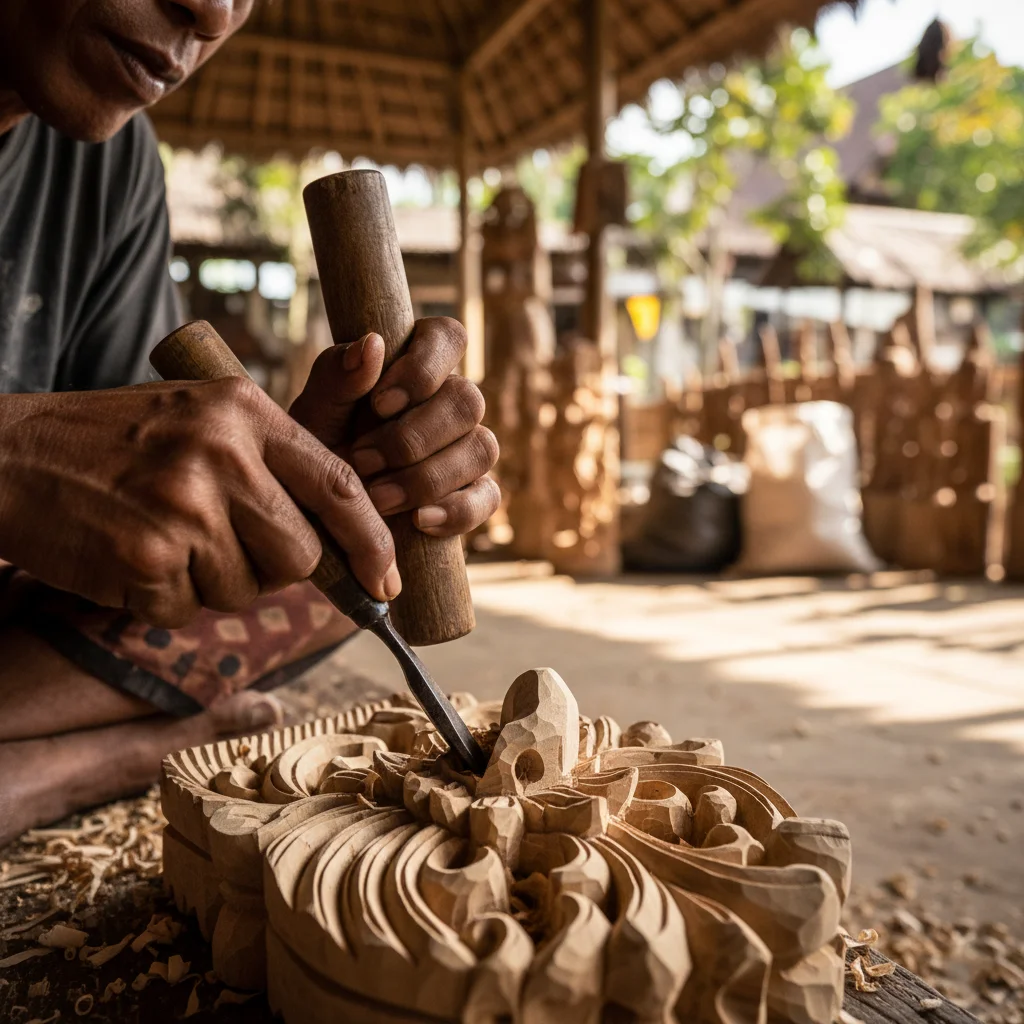
Exploring how time, climate, and nature deepen the narrative of heritage art displayed outdoors.
Speaking of outdoor activities, hiking and camping are certainly unforgettable experiences. Bali has many fascinating hiking and camping destinations, such as Mount Batur with its iconic sunrise, the sacred Mount Agung area, and the hilly regions and lakes like Buyan-Tamblingan that offer a serene and cool atmosphere. However, among all these interesting places, there is almost always one common practice before the journey begins: the recommendation to pray and ask for permission for safety. This prayer is often manifested through canang sari (traditional Balinese offerings) or brief worship—a practice deeply rooted in Balinese Hindu culture that reflects the spiritual connection between humans, nature, and the Creator.
This tradition demonstrates that in local culture, nature is not an empty space to be freely exploited, but rather a living entity worthy of respect. When humans interact with the open environment, there is an awareness that time, weather, and surroundings hold their own power. This awareness also gives profound meaning to cultural artworks placed in outdoor spaces. Unlike art displayed indoors, outdoor artworks undergo natural processes: exposure to sunlight, rain, wind, and seasonal changes. This process is not merely a risk, but part of the artwork’s narrative journey.
Natural exposure allows cultural artworks to evolve over time. Wood that slightly changes color, stone that becomes smoother, or metal that develops natural patina actually adds character and depth to the story. In the context of Indonesian culture, these changes align with the philosophy of life cycles. Art is not viewed as a static object, but as part of a living process. Outdoor artworks seem to “breathe” together with nature, storing traces of time as witnesses to the interaction between humans and their environment.
This is particularly evident in art elements commonly used in outdoor spaces, such as stone sculptures, wood carvings, relief panels, or art installations made from natural materials. These items are often found in home gardens, courtyards, building entrances, and public and spiritual areas. When placed outdoors, these works function not only as aesthetic elements but also as cultural and spiritual markers. They welcome, protect, and remind humans of the values upheld in daily life.
If you’re looking to bring this timeless Balinese artistry into your own space, balithings.com offers an authentic collection of handcrafted outdoor sculptures, garden statues, and traditional carvings—each piece carrying the soul of Balinese craftsmanship.
From an experiential perspective, the presence of cultural art in outdoor spaces also strengthens emotional connections. When someone passes by a sculpture or artwork that has “merged” with its natural surroundings, a sense of respect and reflection emerges. There is an impression that the piece has weathered many events—heavy rain, scorching heat, even traditional ceremonies—and still stands as a symbol of tradition’s resilience. This is a value that cannot be replicated by mass-produced decorative items; it grows from context, time, and real interaction with the environment.
In the context of creative economy and marketable art products, this value becomes extremely important. Cultural artworks for outdoor spaces—such as garden sculptures, exterior carving panels, ritual installations, or outdoor decorative elements—possess an appeal that transcends the visual. They offer stories, processes, and authenticity. Buyers don’t just acquire an art object, but also a narrative about how nature and time helped shape that piece. This makes culture-based outdoor art hold high emotional and symbolic value, whether for private residences, resorts, public spaces, or cultural projects.
At balithings.com, every piece is sourced directly from skilled Balinese artisans who understand this philosophy—creating art meant to live, age gracefully, and tell stories through generations. Whether you’re designing a tropical garden, a resort entrance, or a personal sanctuary, explore their curated selection of authentic Balinese outdoor art.
Ultimately, how natural exposure adds meaning to cultural artworks is about embracing change. Time, climate, and nature are not enemies of art, but partners that enrich its story. In Indonesian culture, which greatly values harmony with nature, outdoor art serves as a reminder that true beauty doesn’t always come from perfection, but from process. By allowing artworks to interact with nature, we don’t just preserve aesthetics—we also maintain the continuity of values, traditions, and identity that live alongside time.
Discover Authentic Balinese Cultural Art for Your Outdoor Space Visit balithings.com to explore handcrafted stone sculptures, traditional wood carvings, and unique garden décor—shipped worldwide.